
























Olympus to Highlight Expanded Endoscopic Ultrasound (EUS) Solutions at Digestive Disease Week® 2026
What: Olympus Corporation, a global MedTech company committed to advancing endoscopy‑enabled care, will showcase an expanded endoscopic ultrasound (EUS) portfolio — including a recently launched EUS ultrasound system and single‑use biopsy device — designed to support early detection and minimally invasive diagnosis of hepato‑pancreato‑biliary (HPB) conditions.
Why it Matters: Liver and pancreatic diseases are increasing in prevalence and often progress silently, with many patients diagnosed only after disease has advanced — limiting treatment options and negatively affecting outcomes.1,2 EUS enables high resolution visualization of lesions and real time, ultrasound guided tissue sampling, helping clinicians more accurately assess diseases and inform treatment decisions earlier in the patient care pathway.3,4 By supporting precise lesion evaluation, staging, and minimally invasive biopsy, comprehensive EUS solutions may help reduce diagnostic uncertainty and limit the need for more invasive procedures, potentially supporting more efficient and patient-centered care.5,6
When: Digestive Disease Week® (DDW) 2026 May 3–5 in Chicago
Featured Technology Highlights
Olympus will feature its comprehensive EUS portfolio, including:
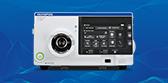
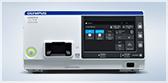
- Aplio i800 EUS Ultrasound System – The latest milestone in Olympus’ strategic distribution partnership with Canon Inc., now available for distribution by Olympus in major U.S. and European markets following its recent U.S. launch. The system provides advanced imaging capabilities to support accurate evaluation of HPB conditions, where early‑stage abnormalities can be difficult to detect and characterize.
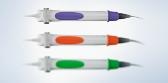
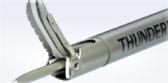
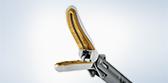
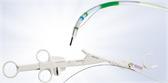
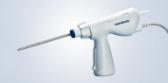
- SecureFlex™ FNB Needle – Featuring the Dual‑Beveled Raptor™ tip that enables collection of large, intact tissue samples, and high flexibility that provides access to difficult‑to‑reach lesions such as the pancreatic head and uncinate process.7
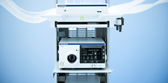
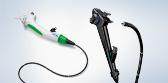
- EU‑ME3 Ultrasound Processor – Integrates endoscopic and endobronchial ultrasound on a single compact workstation, supporting diagnostic imaging and ultrasound‑guided intervention for both GI and pulmonary procedures.
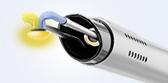
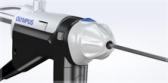
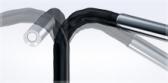
- GF‑UE190 Radial Echoendoscope – A 360° radial scanning echoendoscope designed to support diagnostic evaluation and staging accuracy.
Physician‑Led DDW Sessions
- Dr. Marvin Ryou,* Brigham and Women’s Hospital, “Aplio i800 EUS”
- Sunday, May 3 | 1:30 p.m.
- Monday, May 4 | 2:00 p.m.
Olympus Booth #4611
- Dr. Harshit Khara,* Geisinger Medical Center, “Advancements in Endohepatology Using the Aplio i800 EUS System Featuring 2D Shear Wave Elastography and Attenuation Imaging”
- Monday, May 4 | 11:00–11:40 a.m.
DDW Product Theater
- Monday, May 4 | 11:00–11:40 a.m.
Additional Technologies on Display
- GORE® VIABIL® Biliary Endoprosthesis – Fully covered self‑expanding metal stent for the palliation of malignant biliary strictures, manufactured by W. L. Gore & Associates and distributed exclusively by Olympus.
- OLYSENSE™ Platform with CADDIE™ Software – Cloud‑based AI software shown to assist gastroenterologists in identifying high‑risk and hard‑to‑detect lesions in a multi-centre controlled trial.8
- Extended Depth of Field (EDOF™) Technology – Available in EZ1500 series endoscopes as part of the EVIS X1™ Endoscopy System, providing continuously sharp, high‑resolution imaging with minimal focal adjustment during endoscopic procedures.
For more information, visit Olympus Booth #4611 during DDW or explore the full Olympus® GI portfolio at the Olympus gastroenterology webpage.
Fair Balance Statements and Disclaimers
EUS Needle Risks: Complications from extra-luminal EUS guided FNB may include, but are not limited to infection, bleeding, perforation, and/or tumor seeding. Extra-luminal fine needle aspiration of cystic lesions has a higher risk of complication from infection and hemorrhage.
CADDIE Device Risks: The CADDIE computer-assisted detection device is not intended to replace a full patient evaluation, nor is it intended to be relied upon to make a primary interpretation of endoscopic procedures, medical diagnoses, or recommendations of treatment/course of action for patients. The CADDIE™ device is limited for use with standard white-light endoscopy imaging only.
# # #
* Dr. Marvin Ryou and Dr. Harshit Khara are paid consultants to Olympus Corporation, its subsidiaries and/or its affiliates.
1 Unalp Arida A, Ruhl CE. Burden of Nonmalignant Liver and Pancreatic Diseases in the United States Population: Rates and Trends. Clinical Gastroenterology and Hepatology. 2025;23(10):1679–1692.e9.
2 Rogers HK, Shah SL. Role of Endoscopic Ultrasound in Pancreatic Cancer Diagnosis and Management. Diagnostics. 2024;14(11):1156.
3 Salom F, Prat F. Current role of endoscopic ultrasound in the diagnosis and management of pancreatic cancer. World Journal of Gastrointestinal Endoscopy. 2022;14(1):35–48.
4 Yousaf MN et al. Endoscopic ultrasound (EUS) and the management of pancreatic cancer. BMJ Open Gastroenterology. 2020;7:e000408.
5 Yang P et al. EUS guided tissue acquisition… decreasing the need for invasive diagnostic procedures. Journal of Clinical and Experimental Gastroenterology. 2024;3(1):16–20.
6 Friedberg SR, Lachter J. Endoscopic ultrasound: Current roles and future directions. World Journal of Gastrointestinal Endoscopy. 2017;9(10):499–505.
7 Data on file with Olympus (DC01134422).
8 Kader R, Hassan C, Lanas Á, et al. A novel cloud-based artificial intelligence for real-time detection of colorectal neoplasia – a randomized controlled trial (EAGLE). npj Digital Medicine. Published online December 26, 2025. https://doi.org/10.1038/s41746-025-02270-1